"Recycled" Just Became a Legal Term
Most brands are still using it like a marketing one.
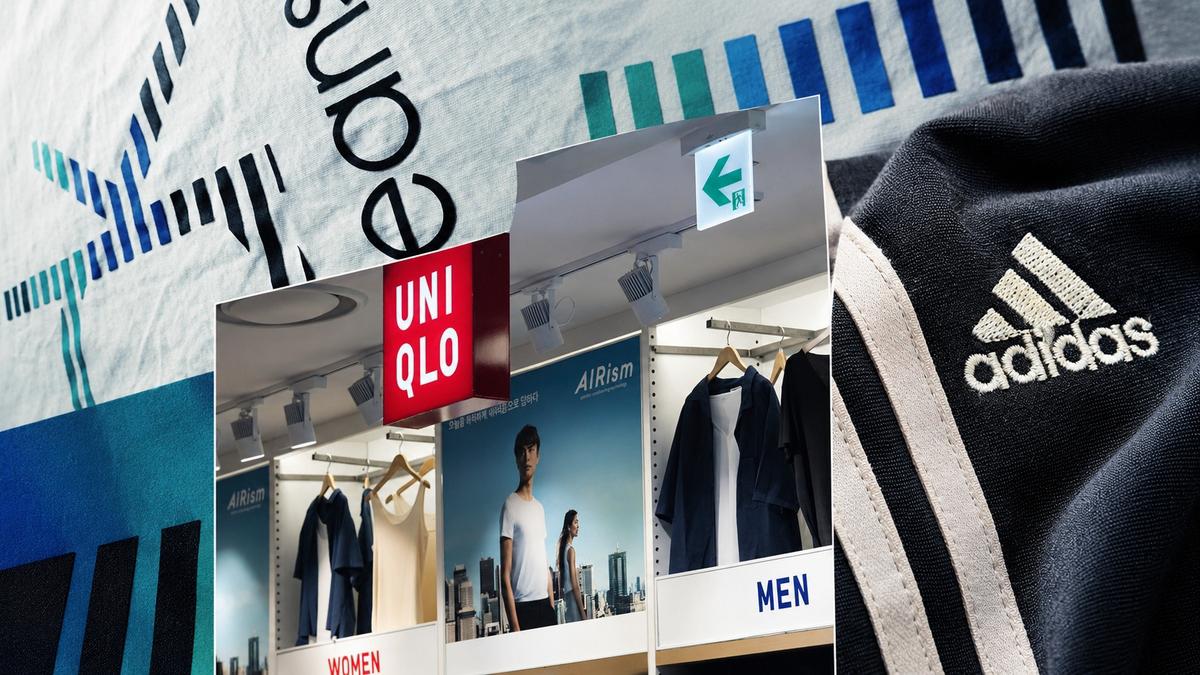
In June 2026, the UK's Advertising Standards Authority (ASA) banned ads from adidas, UNIQLO and Calvin Klein. All three rulings came down for the same reason: each brand used the word "recycled" without being able to prove the entire product met that bar.
It's a small ruling with a large implication. The line between a marketing claim and a legal liability just moved, and most fashion and textile brands haven't adjusted for it yet.
What actually happened
UNIQLO's fleece jackets contained recycled polyester, but the zips and labels weren't accounted for in the claim. Calvin Klein argued that no reasonable shopper would assume "responsibly sourced" applied to every component of a garment, down to the trims. adidas said it didn't operate a dedicated "recycled" shoe range at all, despite running ads that implied one existed.
The ASA disagreed with all three, and its reasoning was consistent across every case: an absolute term like "recycled" carries an absolute burden of proof. If a brand says a product is recycled, the whole product has to earn that word, not just the fabric that was easiest to certify.
This wasn't a one-off. Adidas, UNIQLO and Calvin Klein followed earlier 2025 rulings against Nike, Lacoste and Superdry on similar grounds, flagged through the ASA's Active Ad Monitoring System, which scans ads proactively rather than waiting on consumer complaints. Six brands in seven months, all tripped up by the same word.
Why this is bigger than an ad ban
An ad ban is a reputational inconvenience. What's coming next is a financial one.
UK, DMCC Act: Under the UK's Digital Markets, Competition and Consumers Act, greenwashing penalties can reach up to 10% of a company's global turnover. "Recycled" is no longer just a phrase a legal team reviews. It's a number a finance team has to model against.
EU, Empowering Consumers Directive: From September 2026, generic "green" claims become illegal outright in the EU, not just misleading ones. A claim doesn't need to deceive anyone to trigger action. It just needs to lack substantiation.
EU, revised Waste Framework Directive: From 2028, textile producers will pay recycling fees (Extended Producer Responsibility) that move based on verification. Verified recycled content lowers the fee. Unverified content raises it. Proof becomes a line item.
EU, ESPR and Digital Product Passports: Around the same timeline, products will carry a Digital Product Passport, a scannable record of composition, recycled content and end-of-life pathway. Anyone, a regulator, a retailer, a customer standing in a shop, will be able to check a claim against the data behind it.
Put together, these four shifts point in one direction: claims without a paper trail are becoming a liability.
The real problem: two departments solving half the equation
Most brands split this into two separate functions. Marketing writes the claim. Compliance builds the file that proves it, if it's built at all. The two rarely talk, and the ASA rulings are what happens when they don't.
Marketing without proof is just a claim waiting to be challenged. Proof without marketing is a compliance file nobody sees, sitting in a folder, doing nothing for the brand that paid to produce it. Neither half works on its own. The brands that come out ahead of this regulatory shift will be the ones that treat substantiation and storytelling as one system.
Where Zenero fits
This is exactly the gap we built Zenero to close.
Carbon labels, LCA reports and Digital Product Passports aren't sustainability decorations sitting behind a QR code nobody scans. They're the substantiation layer that lets a brand say "recycled" and mean it in a way that survives a regulator's second look, an auditor's request, or a customer's skepticism.
That's what Zenero builds: the DPPs and carbon labels that let a claim be marketed and proved at the same time. It is one piece of infrastructure that does both jobs.
The brands that build this now won't be scrambling when the passport becomes mandatory. They'll already be the ones with proof to show.
Zenero builds Digital Product Passports, carbon labels and traceability infrastructure for fashion, apparel and home textile brands and manufacturers. If you are looking to produce the evidence within your supply chain, get in touch.
Ready to make impact visible?
Join brands turning sustainability data into a trusted consumer signal and a measurable business asset.
Or reach us at hello@zenero.world