Solutions
The standard for sustainability intelligence
AI-powered, compliant sustainability assets for manufacturers and consumer brands, from SKU-level measurement to consumer-facing disclosure.
Carbon Labels
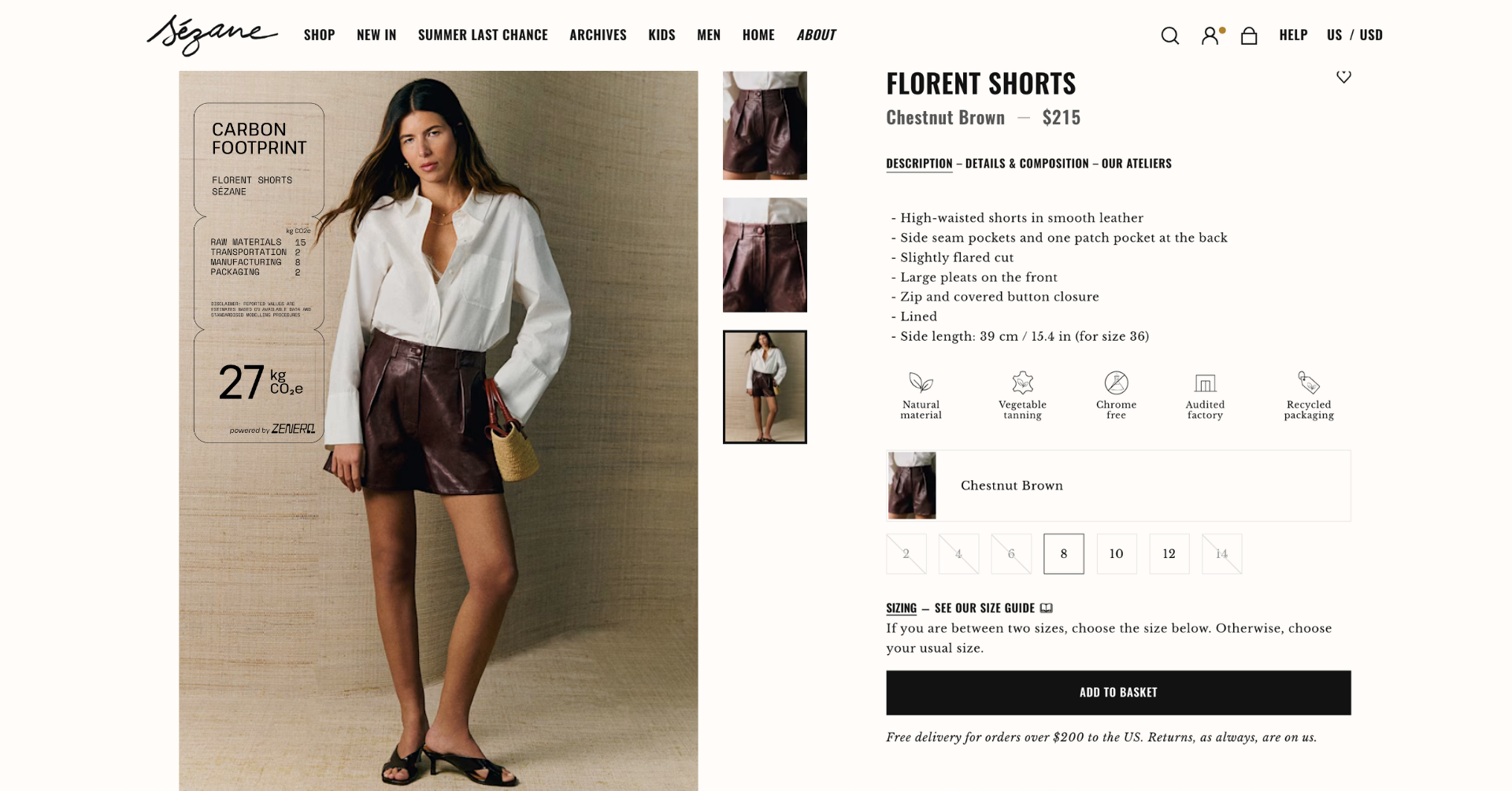
A carbon footprint label for every product in your collection, designed to sit at the point of sale where purchase decisions are made.
What it does
- SKU-level precision. Each label consists of the lifecycle assessment (LCA) of that specific product with its lifecycle stage breakdown.
- Point-of-sale placement. Built to live in your product listings, alongside pricing and product imagery.
- Compliant and standardised. Calculated to internationally recognised standards for carbon accounting and lifecycle assessments.
- Ready to use. Delivered as a digital asset, ready to layer onto your existing product visuals with no redesign needed.
The bigger picture
Sustainability claims are everywhere. A carbon label is different because it puts a number to the claim, right where the customer is looking. Think of it the way nutrition labels changed food: not as a constraint, but as a new kind of trust signal.
Carbon Hang-tags
A printed hang-tag on the item, carrying its carbon label and a QR code leading directly to its Digital Product Passport (DPP). Physical proof of the product's footprint visible at the point of sale, and the moment of unboxing.
What it does
- Physical hang-tag. Your product's footprint travels with the product, in the hands of the end customer.
- QR code to full DPP. One scan takes the customer to the complete Digital Product Passport for that specific product.
- Printed near you. Tags are printed close to where they will be used, keeping transport and costs low.
- ESPR ready. Structured to meet the EU's Ecodesign for Sustainable Products Regulation requirements.

Built for regulation
The EU's Ecodesign for Sustainable Products Regulation (ESPR) will require transparent product information on the product itself in the form of accessible QR codes. Zenero's hang-tag is designed around this core requirement.
Digital Product Passports
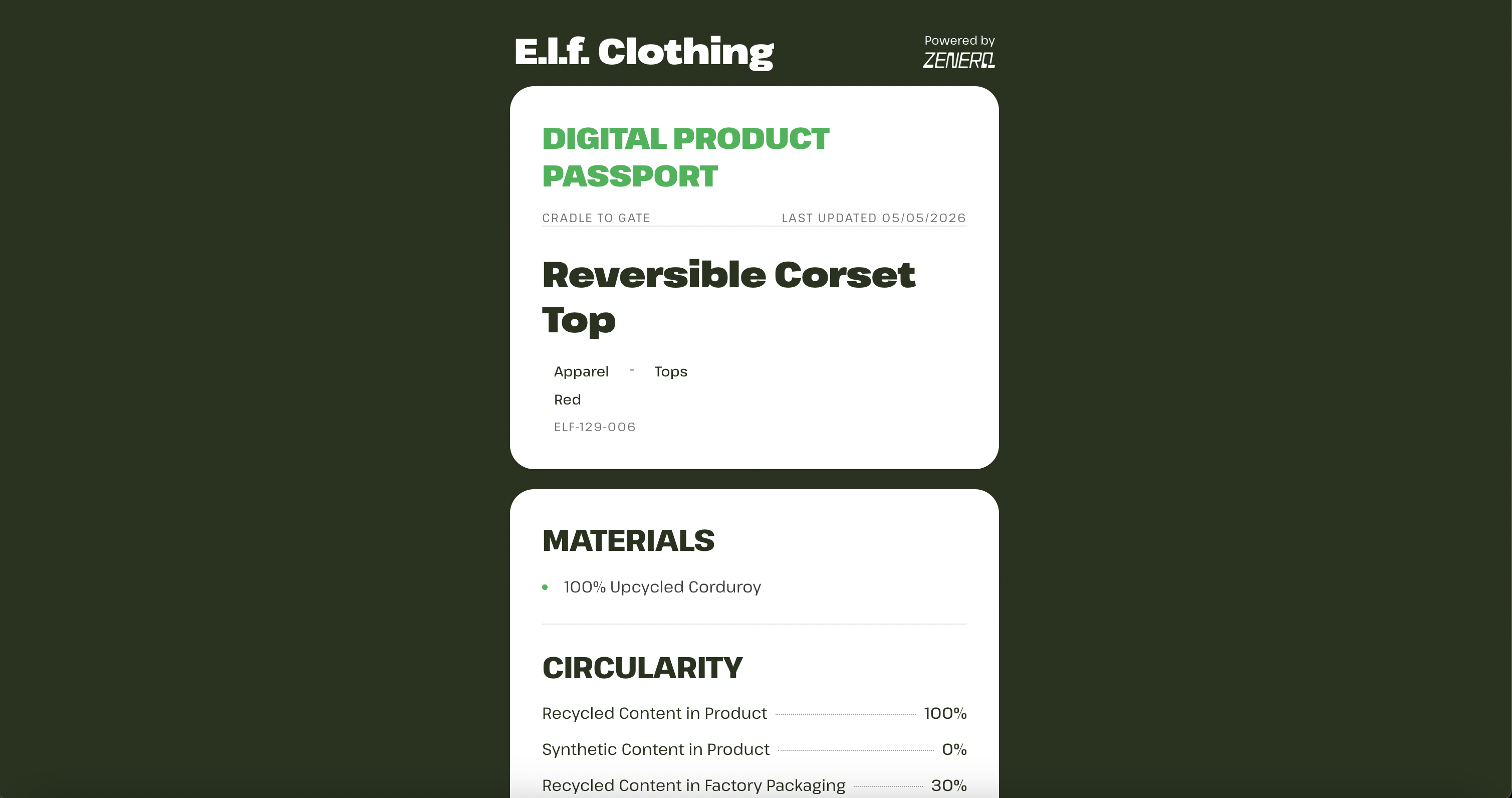
A real-time, product-specific webpage that carries everything a regulator, retailer, or customer needs to know about where that product came from and what it is made of.
What it is
A Digital Product Passport (DPP) is a structured, compliant record tied to a specific product. Every DPP Zenero generates is unique to its SKU, built to ESPR standards, and updated in real-time as your supply chain data changes. Packages and presented so that the end-consumer can read and understand with ease.
Accessible everywhere. Reachable from your e-commerce product listing, your hang-tags at retailers, or directly from the product itself.
- Full product story. Materials, origins, carbon impact, circularity, traceability, and resources in one place.
- Updated in real-time. The passport reflects your current data. Updates happen in real time.
- Accessible everywhere. Reachable from your product listing, your hang-tag, or directly by a buyer or auditor.
- ESPR compliant. Formatted and structured to satisfy the EU's Digital Product Passport requirements ahead of time.
More than a page
A Digital Product Passport is a structured, compliant record tied to a specific product, not a generic sustainability page. Every DPP is unique to its SKU and updated as your supply chain data changes.
Life Cycle Assessment Report
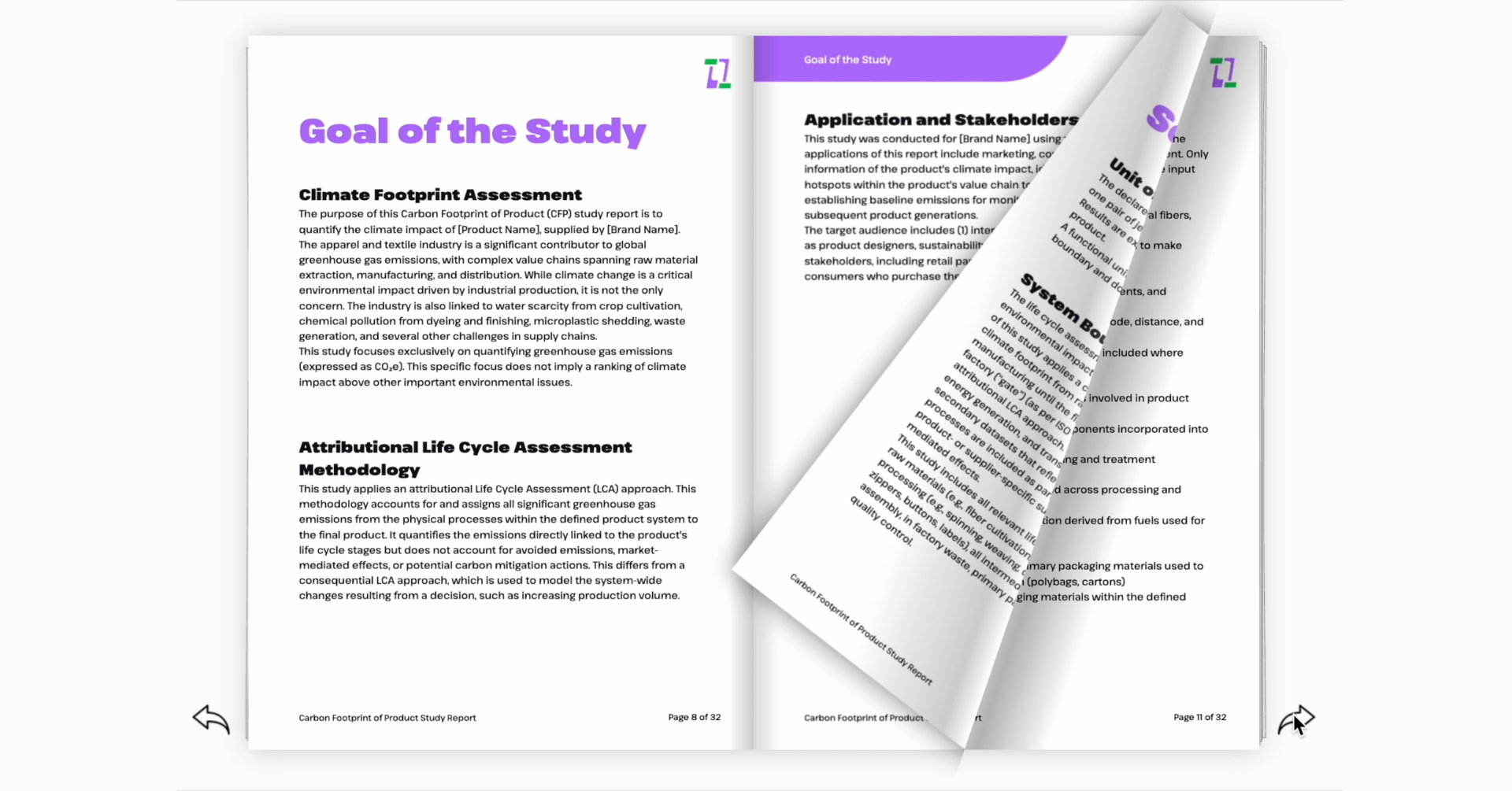
A comprehensive lifecycle assessment study report for each product. The methodology, the data, and the documentation that backs every number Zenero powers and you showcase.
What it is
An LCA report is the document behind the label. It is what you share when a buyer asks for reasoning, when a regulator requires methodology disclosure, or when you want to understand where emissions come from and how to reduce them.
- Comprehensive. Covers methodology, data sources, breakdowns, and uncertainty disclosure in full.
- Audit ready. Structured to be handed directly to buyers, retailers, certification bodies, or regulatory bodies as-is.
- Cradle-to-gate boundary. Covers every stage from raw material extraction through to finished product at the factory gate.
- Per-SKU granularity. Every report is specific to one product. Every carbon number Zenero displays publicly is traceable back to a full LCA report.
The document behind the label
An LCA report is what you share when a buyer asks for reasoning, when a regulator requires methodology disclosure, or when you want to understand where it all comes from and how to reduce it. Every Zenero carbon label is backed by an LCA report.
Aligned with global standards

Ready to make impact visible?
Join brands turning sustainability data into a trusted consumer signal and a measurable business asset.
Or reach us at hello@zenero.world